Why some players suddenly stop enjoying online casinos
Online casinos are designed to be entertaining, fast-paced and constantly stimulating. Between live dealers, slot tournaments, bonus offers and jackpot alerts, players always have something happening on screen. However, many regular gamblers eventually experience something unexpected: gambling fatigue.

120%
up to 20 000€
-
Free Spins
x30
Wager
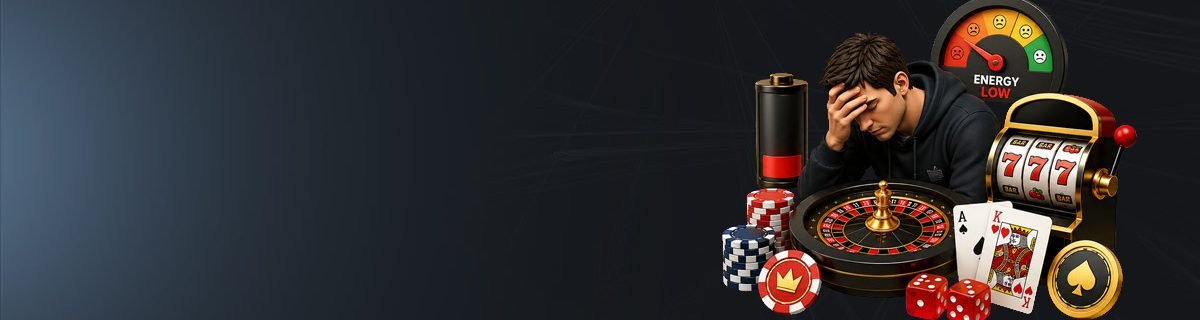
This feeling appears when casino games no longer create the same excitement as before. Sessions become repetitive, wins feel less satisfying and losses feel increasingly frustrating. Some players continue gambling out of habit rather than enjoyment, while others suddenly lose all interest in online casinos entirely.
Gambling fatigue is becoming more common as online casinos evolve into 24/7 entertainment platforms accessible from anywhere. Understanding why this happens can help players maintain healthier gambling habits and avoid turning entertainment into emotional exhaustion.
What is gambling fatigue?
Gambling fatigue refers to the emotional and mental exhaustion some players experience after long periods of online gambling activity. It does not necessarily mean gambling addiction, although the two can sometimes overlap.
A player experiencing gambling fatigue may feel bored during sessions, emotionally disconnected from wins or irritated more quickly after losses. Games that once felt exciting may suddenly seem repetitive or empty.
This phenomenon often develops gradually. At first, players simply notice reduced excitement. Over time, however, gambling sessions may feel more like routines than entertainment.
The constant accessibility of online casinos contributes heavily to this issue. Unlike physical casinos requiring travel and preparation, online platforms remain available permanently through smartphones and computers.
Many users never fully disconnect from gambling environments because notifications, promotions and live streams constantly encourage new sessions.

400%
up to 2 000€
200
Free Spins
x30
Wager

100%
up to 2 000€
150
Free Spins
x40
Wager
120%
up to 20 000€
-
Free Spins
x30
Wager
Why online casinos can become mentally exhausting ?
Modern online casinos are intentionally designed to maximize engagement. Fast gameplay, colorful visuals, sounds and reward systems stimulate the brain continuously during sessions.
While this creates entertainment initially, constant stimulation can eventually become mentally draining for frequent players.
Slot games are a strong example. Modern video slots include animations, multipliers, bonus rounds and rapid spin speeds that create intense sensory activity. Over time, repeated exposure to these mechanics may reduce emotional impact.
Another factor is emotional volatility. Gambling naturally alternates between excitement and frustration. Repeated emotional swings during long sessions can create mental fatigue, especially when players chase losses or gamble under stress.
Crypto casinos and live casino platforms intensified this trend further by making gambling accessible instantly at any time of day.
Common signs of gambling fatigue include:
- Boredom during casino sessions
- Reduced excitement after wins
- Irritation after small losses
- Gambling out of habit
- Shorter attention spans while playing
- Emotional detachment from results
Recognizing these signs early can help players maintain healthier relationships with gambling entertainment.
The role of dopamine in gambling burnout
Part of gambling fatigue is linked to how the brain processes rewards. Casino games trigger dopamine release, the neurotransmitter associated with anticipation and pleasure.
Importantly, dopamine is often activated more strongly by anticipation than by the reward itself. This means the excitement before a roulette spin or slot bonus can feel more stimulating than the actual result.
Over time, however, repeated stimulation may reduce emotional sensitivity. Players then require increasingly stronger excitement to feel the same level of engagement.
This explains why some gamblers gradually move toward riskier bets, higher volatility slots or larger stakes after long gambling periods.
The problem is not always financial loss directly. Sometimes players simply stop feeling entertained despite continuing to gamble regularly.
This cycle resembles burnout seen in other entertainment habits such as gaming, social media or streaming platforms where overstimulation eventually reduces enjoyment.
100%
up to 2 000€
150
Free Spins
x40
Wager
How live casinos changed player behavior ?
Live casino technology transformed online gambling significantly by making sessions feel more immersive and social. Real dealers, live chats and interactive environments created experiences closer to physical casinos.
While many players enjoy this realism, it also increases emotional engagement. Spending hours interacting with live roulette tables or blackjack dealers can become mentally exhausting over time.
Live casino games also tend to encourage longer sessions because the gameplay feels more continuous and socially engaging than standard slot spinning.
Some players begin treating live tables almost like social environments rather than gambling sessions. This can make it harder to recognize fatigue or stop playing at reasonable times.
Streaming culture amplified this effect further. Watching gambling streams online exposes players to constant casino content even outside personal gambling sessions.
The result is that many users remain surrounded by gambling-related stimulation almost continuously.
When gambling stops being entertainment ?
Healthy gambling generally remains entertaining regardless of wins or losses. A player may lose money but still enjoy the experience overall because it feels recreational.
Gambling fatigue changes this balance. Sessions become emotionally empty, frustrating or purely mechanical.
Certain players continue depositing simply because gambling became part of their routine. Others chase the excitement they previously felt but struggle to recreate it.
This is where emotional risk increases significantly. Gambling without enjoyment often leads to impulsive behavior or unhealthy financial decisions.
Several warning signs may indicate gambling is no longer functioning as entertainment:
| warning sign | why it matters |
|---|---|
| gambling while bored | reduces emotional control |
| chasing old excitement | increases risky behavior |
| ignoring session limits | weakens discipline |
| emotional frustration | increases impulsive betting |
| gambling automatically | creates unhealthy routines |
| loss of enjoyment | suggests mental exhaustion |
Recognizing these patterns early helps prevent deeper gambling-related problems later.
How to reduce gambling fatigue ?
The simplest solution to gambling fatigue is often taking breaks. Stepping away from casino environments for several days or weeks can help reset emotional balance and reduce overstimulation.
Players should also avoid gambling continuously across multiple platforms simultaneously. Switching constantly between slots, sports betting and live casino games increases mental overload.
Creating clear gambling routines can also improve control. Defining budgets, session durations and break periods helps maintain gambling as structured entertainment instead of constant stimulation.
Other useful habits include:
- Disabling casino notifications
- Avoiding gambling while stressed
- Limiting late-night sessions
- Taking regular screen breaks
- Separating gambling from daily routines
Some players rediscover enjoyment after reducing gambling frequency significantly. Others realize they simply needed healthier balance with other hobbies and activities.
400%
up to 2 000€
200
Free Spins
x30
Wager
The difference between fatigue and addiction
Gambling fatigue and gambling addiction are not identical, although they can sometimes overlap.
A fatigued player may lose interest or enjoyment while still remaining capable of stopping gambling voluntarily. Addiction involves loss of control, compulsive gambling behavior and continued betting despite harmful consequences.
However, fatigue can occasionally become dangerous if players respond by increasing stakes or gambling frequency to recover emotional excitement.
This is why self-awareness remains essential. If gambling begins causing emotional distress, financial problems or compulsive habits, professional support may become necessary.
Responsible gambling tools offered by licensed casinos can help players maintain healthier habits before problems escalate.
Why the online casino industry encourages constant engagement ?
Modern online casinos compete heavily for player attention. Operators use promotions, loyalty rewards, tournaments and personalized notifications to encourage regular activity.
From a business perspective, player retention is extremely valuable. The longer users remain active, the more revenue casinos potentially generate.
This explains why gambling platforms increasingly resemble social media or mobile gaming apps in terms of engagement strategies.
While these systems are not automatically harmful, they can contribute to overstimulation when players never fully disconnect from gambling environments.
Understanding these mechanics helps users approach online casinos more consciously instead of reacting impulsively to constant promotions or excitement triggers.
Can gambling become fun again after burnout ?
For many players, yes. Gambling fatigue is often temporary rather than permanent.
Taking extended breaks, reducing session frequency and approaching gambling more casually can restore enjoyment over time. Players who return with healthier expectations and better balance usually experience less frustration.
The key difference is perspective. Gambling works best as occasional entertainment rather than constant stimulation or emotional escape.
Online casinos are designed to create excitement, but maintaining personal control over frequency and emotional involvement remains the player’s responsibility.
Ultimately, recognizing gambling fatigue early can help players preserve healthier habits and prevent online casinos from turning into exhausting routines instead of enjoyable entertainment.
Frequently asked questions
What is gambling fatigue?
Gambling fatigue refers to mental and emotional exhaustion caused by repeated or excessive gambling activity.
Is gambling fatigue the same as addiction?
No. Fatigue involves reduced enjoyment and emotional exhaustion, while addiction involves compulsive gambling behavior and loss of control.
Can taking breaks help gambling fatigue?
Yes. Many players regain healthier balance and enjoyment after stepping away from gambling temporarily.
Why do online casinos become repetitive?
Constant exposure to similar reward systems and rapid stimulation can reduce emotional excitement over time.
Should players stop gambling if they feel exhausted?
Taking breaks and reassessing gambling habits is generally recommended when sessions stop feeling entertaining.